When young people are trusted with knowledge and given the tools to express themselves, they can transform not only their own realities but the communities around them. This was the thinking behind the ‘Our Voices, Our Power’ initiative, under which a group of twenty adolescents from Abuja’s underrepresented communities and IDP camps recently completed a project that set out to demonstrate how feminist education, creative storytelling, and intergenerational dialogue can transform not only knowledge but consciousness itself.
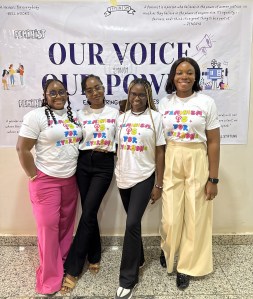
The ‘Our Voices, Our Power’ Team: Priye Diri, Opeyemi Adenikan, Elizabeth Kedonojo Umoru, and Ogri Caro-Ann Aricha [Photo courtesy the Team]
The ‘Our Voices, Our Power’ initiative was a four-month gender multifaceted project implemented by Nigerian Green Academy Fellows, Ogri Caro-Ann Aricha, Opeyemi Adenikan, Elizabeth Kedonojo Umoru, and Priye Diri, with support and funding from Heinrich Böll Stiftung Nigeria. The team designed a programme that combined feminist education, creative storytelling, and digital advocacy to help young people recognise inequality, articulate their lived realities, and use their voices for change. FemBud supported the project by providing venues, assisting with logistics, and securing panellists and influencers who helped broaden the visibility of the final outputs.
The project began in July with an extensive community mobilisation and onboarding process across Durumi 1–3 and the New Kuchingoro IDP Camp. The team held meetings with community heads, guardians, and other local actors to introduce the initiative, explain its objectives, and establish trust. An essay competition titled ‘My Dream of a Gender Equal World’ was announced as the entry point for participation, inviting adolescents aged thirteen to eighteen to imagine what a fair society would look like and how gender equality could influence their communities. From the submissions, twenty finalists, comprising twelve girls and eight boys, were selected based on originality, clarity of thought, and alignment with gender justice themes. Their essays provided the first layer of insight into their perceptions of feminism, allyship, and the social barriers that shape adolescence in displacement-affected contexts. By the time the onboarding session was held on 26 July, participants and parents had been properly introduced to the project’s values, expectations, and educational angles, and the community’s endorsement had been firmly secured.
Workshop session (Photo Courtesy Priye Diri/SEVHAGE)
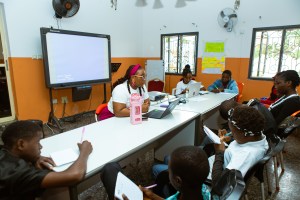
The adolescents’ first major learning encounter came on 29 July at The Meeting Point Event Centre in Gudu, Abuja, where the team led a documentary screening and intergenerational discussion designed to deepen their understanding of gender justice. After a brief introductory session in which only two participants initially identified as feminists, the facilitators introduced the basics of feminism and positive masculinity, an early conceptual grounding that would shape the rest of the project. The young people watched six documentaries – ‘What Is Feminism?’, ‘Boys Don’t Cry’, ‘Our Children Won’t Be Feminist’, ‘Because I Am a Girl’, ‘Dear Daddy,’ and Chimamanda Adichie’s ‘We Should All Be Feminists’ – that offered alternative perspectives on gender norms, social conditioning, and the cost of silence. Reflection circles followed, facilitated to encourage honest response. Some of the terms used in describing the documentaries included “enlightening”, “educative”, and “eye-opening”. Girls raised concerns about early marriage, safety, and silencing; boys confronted the weight of societal expectations around dominance and emotional invisibility. The intergenerational panel that followed featured Nafisat Atiku-Adejuwon, Dorothy Njemanze, and Kenneth Kamar, who shared personal stories of navigating gendered challenges in their fields. Their contributions broadened the adolescents’ sense of what advocacy could look like, grounding big concepts in lived experience.
The momentum built in July transitioned into a more intensive learning period in August, beginning with storytelling and video scripting workshop on three separate days in August. Led by Elizabeth Kedonojo Umoru, Priye Diri, Ogri Caro-Ann Aricha, and Opeyemi Adenikan, the sessions introduced the adolescents to the fundamentals of narrative structure, the ABCs of storytelling, and the role of narrative power in feminist advocacy. Participants analysed their community landscapes, identified key gender-related themes affecting their daily lives, and began drafting scripts that reflected challenges such as menstrual stigma, fairness in decision-making, girls’ access to education, toxic masculinity, and empathy. The sessions were collaborative, emotionally expressive, and deliberately inclusive. The participants formed seven groups and developed seven scripts that balanced authenticity with a clear advocacy message. Through peer review and mentor-led refinement, the adolescents learned not only how to tell stories but how to tell them with purpose, responsibility, and awareness of community impact.
From mid-August, these scripts began their transition into short films through an intensive production phase led by filmmaker and mentor Priye Diri, supported by the wider project team. The adolescents learned camera basics, visual framing, acting confidence, interviewing techniques, and the discipline required for filming. FemBud assisted in securing suitable venues and logistical support, helping to ensure a smooth and safe production experience. The videos; seven in total, with the longest running just under seven minutes, covered themes ranging from girls’ aspirations to boys’ emotional vulnerability. Titles included ‘Boys Are Humans,’ ‘The Red Truth,’ ‘Girls Can Dream (AMIRA),’ ‘My Dreams Are Not Shattered,’ and others that collectively formed a mosaic of adolescent perspectives on gender dynamics. Participants were active both in front of and behind the camera, deepening their media literacy while practising teamwork, public speaking, and creative problem-solving.
On 24 October, the advocacy films were launched across TikTok, Instagram, and LinkedIn through a digital campaign amplified by influencers such as Elizabeth Obanghe Enu-Akan and Elizabeth Nwaiwu. Shared under the hashtag #HerVoiceHerPower, the campaign foregrounded the girls’ perspectives while visibly positioning the boys as allies, signalling the project’s commitment to transforming gender discourse as a collective endeavour. The digital launch extended the reach of the adolescents’ work far beyond their immediate communities, inviting broader audiences to engage with questions of gender justice, youth agency, and storytelling as a tool for transformation. FemBud’s role in bringing influencers on board further strengthened this outreach, ensuring sustained visibility for the project’s outputs.
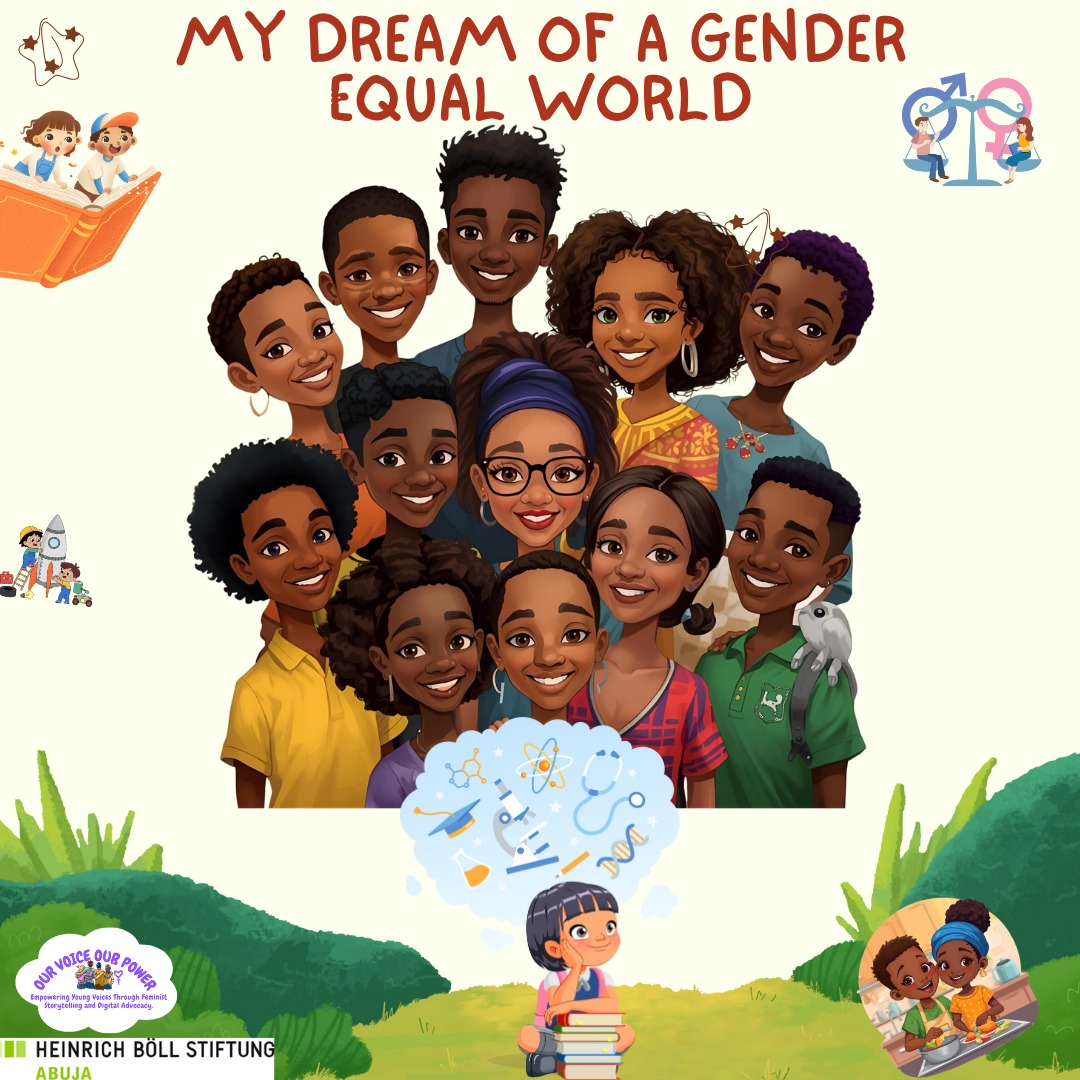
The project’s narrative arc did not end online. With support from Heinrich Böll Stiftung Nigeria, the participants’ original essays were compiled into a book titled My Dream of a Gender Equal World, edited and privately published as part of the project’s legacy. In November, the book was presented during a small engagement with the Ministry of Youth and guardians of the participants. The event highlighted the adolescents’ intellectual contributions, reaffirmed their growth, and facilitated strategy conversations on how to sustain the project’s values within classrooms, households, and community structures. The participants also showcased elements of their learning, from public speaking to panel discussions, offering a multi-dimensional account of how the project had shaped their confidence and worldview.
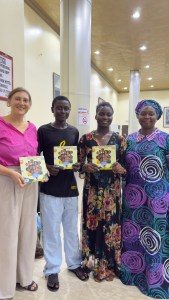
Sophie Von Knebel [Country Director, Heinrich Böll Stiftung Nigeria], Joseph and Hope [Adolescent Participants], and Ere Amachree [Programmes Manager, Rethinking Politics, HBS] [Photo Courtesy: The Team]
By the close of the project cycle, the shifts were measurable. At the start, only two participants identified as feminists; by the end, all twenty confidently embraced the term, describing feminism as the belief in equal rights for girls and boys. Their familiarity with storytelling concepts increased from 25% to 90%, and public speaking confidence rose from 20–30% to between 80–100%. Participants began influencing their peers and siblings, sharing newly acquired feminist literacy and modelling gender-equitable behaviour. Mixed-gender teamwork improved significantly, and many expressed a desire to continue creating videos, forming storytelling groups, or taking part in future advocacy efforts. Parents, who had initially approached the project with curiosity and caution, became active supporters, attending rehearsals and celebrating the adolescents’ achievements. Community leaders, too, engaged in follow-up discussions that may inform future programmes.
One notes through projects like ‘Our Voice, Our Power’, that when adolescents are given safe spaces, informed mentorship, and platforms for expression, they begin to reinterpret themselves and their surroundings. They unlearn internalised limitations, articulate injustice where they once encountered silence, and assume agency where they once felt invisible. They build solidarity across gender lines, practise empathy, and experiment with advocacy in ways that ripple beyond individual experience. The blend of feminist education, creative production, community engagement, and digital activism proved catalytic, showing that voice, once nurtured, seldom retreats into quietness. In all, one can easily say that the project has proven to be a formative encounter with possibility, identity, and citizenship, for the twenty adolescent participants, and hopefully, all those they will step down their knowledge to.
As a youth-centred feminist intervention, this project is a significant contribution to gender justice education in Nigeria’s displacement and low-income contexts. It demonstrated a workable model for strengthening youth agency through participatory storytelling, multimedia advocacy, and intergenerational support networks. Alongside the physical deliverables of the project, its legacy now resides in the confidence, awareness, and sense of responsibility carried forward by the participants. If stories shape societies, then these young storytellers have already begun reshaping and rewriting theirs, the first chapter of what could become a sustained, community-driven movement for gender justice led by the very young people who stand to inherit the systems they seek to transform.
S. Su’eddie Vershima Agema is a multiple-award-winning writer, editor, cultural advocate, scholar and development practitioner. He is the Executive Director of SEVHAGE Literary and Development Initiative, and notably convenes the annual Benue Book and Arts [International] Festival holding in Nottingham (United Kingdom) and Nigeria. He was previously the Black History Month/Project Curator and co-founder/president of African Writers [Society] at the University of Sussex, where he earned an MA with distinction in International Education and Development as a Chevening Scholar. He was also a 2022 David C. Pollock Scholar of the International Families in Global Transition.
Among other prizes across genres, he has won the Association of Nigerian Authors Poetry Prize (2014 & 2022), the Mandela Day Short Story Prize 2016 and was a finalist for the Nigeria Prize for Literature (2022), Africa’s most prestigious literature prize worth $100,000. He has also been shortlisted for prizes such as the SDGs Short Story Award 2021 by the Economic Commission for Africa (2021); the Wole Soyinka Prize for African Literature (2018), the Abubakar Gimba Prize for Short Stories 2022, Saraba/PEN Nigeria Poetry Prize (2012), and the Association of Nigerian Authors Prize for Prose Fiction (2014).
Among other books, he is the author of Memory and the Call of Water and The Bottom of Another Tale. He also heads SEVHAGE Publishing, as well as African and Black Creatives 4 Development. He is the Managing Editor of the notable poetry collective, Konya Shamsrumi, and sits on the editorial team of Cons-cio Magazine. He also convenes and administers the SEVHAGE Literary Prizes, a collection of different prizes across the various genres.

 SEVHAGE [MIDLAND] Reviews