Lady Uche Helen Ibezim is an educationist, director with the education department of the Federal Capital Territory, Abuja, Nigeria and a prolific author who has published several books, particularly under the SEVHAGE publishers imprint, including Your Gift is your Power (a motivational book), Beyond the Heartbeat (novel), and The Ultimate Price (collection of plays). In this in-depth interview, she discusses her life and work with S. Su’eddie Vershima Agema.
- You have been several things in your life, a teacher, a principal and now a Director of Education in the FCT. Give us a background into your life and person.
I am from Anambra state of Nigeria, born into the family of Okoli Egbo in Nawfija, Orumba South LGA, and married into the family of Ibezim in Mbaukwu, Awka South LGA. I was born at Enugu, had my primary and secondary education there, and did my tertiary education at the University of Nigeria, Nsukka where I graduated with Second Class Honours (Upper Division) in French. I obtained my Post Graduate Diploma in Education in the same university, got my Diploma in French Civilisation at University of Grenoble, France; Computer studies & Information Technology at Zion Institute, Certificate of Creativity in New York City USA.
I have held other responsibilities such as National Public Relations Officer of Road Safety Officers’ Wives Association; editor of ROSOWA Safety Lifestyle Magazine; secretary of the Research Committee of FCT ANCOPSS (All Nigeria Confederation of Principals of Secondary Schools); and president/chairlady of many women organisations which include my town and church women meetings.
I have been recognised and honoured with several awards such as: ‘The Best Head of Department’ in one of the schools I taught; ‘Woman of Vision’ by Star Club of Karshi; recognition as the best principal in Karshi zone of FCT by the Karshi Inspectorate Division; Matron of Scouts Association of Nigeria; Award of ‘Mother of Faith’ by the Anglican Diocese of Awka; Jerusalem Pilgrim; and Award of Excellence by various organisations and religious bodies.
- You are an all-rounded writer who has about written in all the genres from fiction to poetry, plays, children fiction and even two inspirational books. Considering this journey started in 2015 when we published your first book, Your Gift is your Power, you have come a long way in a very short time. What has been your inspiration, and what has the journey been like so far? Also, how has your professional background influenced your writing?
My inspiration is the love for literary works and the desire to impact knowledge. Right from childhood, my mother taught me how to develop love, deep passion and appreciation for books. This, I carried along till adulthood. The journey has not been a very smooth one due to the rigours in writing, editing, and publishing in the book industry. But due to my interest in seeing my works as being counted among the works that are positively influencing people, I never got deterred. My professional background, to a large extent, influenced my writing. As an author from the teaching profession, my experiences count a lot. My writing is often inspired by personal experience, and most of the illustrations are real-life experiences that teachers encounter almost on daily basis, and these are issues I wish to be either corrected or maintained.

- Do you generally have a specific style of writing and would you want to comment on it or do you come across differently in your different works?
It depends on particular works. My storybooks are with narrative style, giving accounts of events or describing situations. Some of my other works are informative; when I desire to pass on some information concerning certain events or practices. Some are instructive or advisory, especially in my motivational books. Some are pictorial and sometimes in the form of comics, as in the kiddies’ books, for aesthetic appreciation and easier understanding. Then, some are lyrical, as in my poetry book, for the reader to move smoothly and excitingly as in music, with the rhythm of the poems.
- Which of your works was your toughest to write and why was it so?
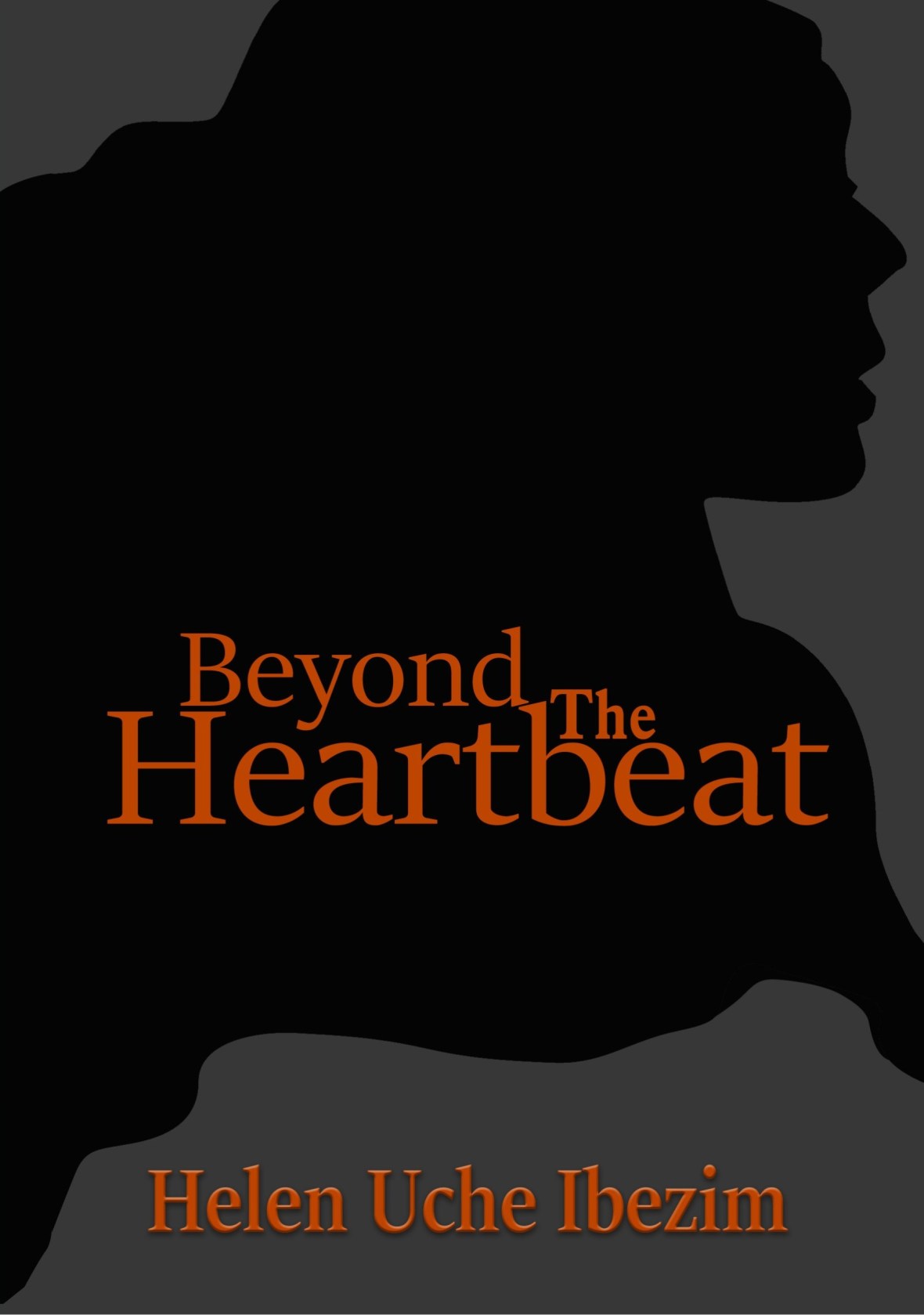
My toughest work was my novel and humble contribution to African literature, Beyond The Heartbeat. This was because I had to build the characters with their various functions meticulously; do research on what was obtainable within the setup period as any contrast would be a blunder; imagine possible and plausible actions that could be built into the story, recall some life experiences, both ugly and beautiful; searching for a befitting title for the work, and so on.
- Which of your works is your favourite and why?
My favourite work is, incidentally, the one that was my toughest to write! Beyond The Heartbeat is a book that continually reminds me of my primary school, secondary school, and university experiences. Anytime I go through the book, even as I wrote it, I recall myself within those scenarios, and these are the most active and exciting periods of one’s life, if I must confess. Through some of the characters in the book, I brought to bear some exciting experiences many other adults like recalling in their lives.
- That is nice to know. Keeping the narrative to Beyond The Heartbeat, which you say was your toughest book to write and favourite, it is a book set mainly in a traditional society. You extol a lot of cultural values while also painting a picture of what happens when people hold on to evil customs. Can you let us in on the evident emotion you poured into this work and your reason for strong cultural statements that nearly border on authorial intrusions?
To me, tradition plays a vital role in people’s lives, and that is why I extensively described some of the traditional practices in the book. The tradition of display of cultural dances, for instance, is a unifying force in communities. With tradition in force, people don’t take laws into their hands because they realise there are checks and balances here and there. Let me put that out first.
My reason for being so emotionally touched and taking that stance in the writing is because I’m indirectly a victim. How? My maternal grandmother was a direct victim! Before the birth of my mother, her mother – that is my maternal grandmother now – had two sets of male twins who were killed because of the tradition of killing twins then. After their murder, she was lucky to have single deliveries of sons, twice, before the eventual birth of a daughter, my mother. So, you can visualise the agony with which I wrote that book. If those boys were allowed to live, probably, they would have been forces to reckon with in terms of proffering solutions to the divergent human problems. And that was why I made the novel to have the end it has, even though some readers might have wanted it different. My principal aim would have been defeated otherwise. I ended it in such a way that people should realise that certain obnoxious practices could bring consequences to everyone, guilty or innocent. Therefore, the best option is to avoid such. Lessons must be learnt.
My extolling the cultural values was to edify our much cherished traditional norms which we enjoyed, growing up. But we should not forget that amidst the advantageous traditions, there were some which did not augur well for the people, hence the case of my protagonist. The book, therefore, aims at maintaining the non-hazardous ones and eradicating the bad ones such as the killing of twins, which was my primary purpose of writing the book. Up to date, I’m nursing the ill-feeling of losing some uncles who would have lived their lives of fulfilment.
- What was the writing process like in the book and what aspects were especially difficult to create?
Talking about the writing process is just like narrating an entire story, to me. It was entirely mind-engaging! I had to think and think in order to make the story real. Mind you, I simply got the story that my grandmother had twins who were killed during the era twins were not considered as ‘normal’ babies. That was all! From the story, I had to develop what could have happened to some other women who experienced such trauma. I had to imagine what some women who couldn’t have easy deliveries went through when they eventually had twins as babies. Imagination was the key factor, together with the blending of the story with some life experiences of some people I know.
The difficult aspect was my effort to blend my imagination with the reality of the situation I was trying to create. Sometimes, scenes appeared like a puzzle to me, which I needed to provide answers to. Certain things are definitely not probable, but the mind can imagine that. So, in building the story, I had to remove the improbable actions and replaced them with actions that could be obtainable. I had to make calls to some of my relations to confirm some practices which were obtainable within the period. These were my frustrating moments, as some of their ideas were not what I initially conceived. But I had to consider facts, to make my story authentic and appear real.
In the case of how long the book took me to write, I would say it took me about two years, though I was writing some other pieces in between. I had to pause from time to time to build up the activities of my characters.
- How are your characters moulded to create excitement? In essence, can you discuss your characterisation process and what stands out about your characters and your thematic preoccupation?
For my characters in that book, that is Beyond the Heartbeat, I had to think of certain people I have met in real life situations to infuse their behavioural displays which, either portrayed excitements or irritations, into the book. I have met a lot of people who were either humourous in nature, like in the case of the clown, Ejiogu, or nonentities, like in the character, Iwendi, or very emotional, like in the character, Ifeatu.
As my concern was to showcase the evil practices amidst the enjoyable norms and traditions then, I had to blend my characters with the good, the bad, and the ugly. Definitely, without the exciting characters who created some sense of humour in the book, the entire story would have been full of agony, which readers may not generally appreciate. So, the reader is kept in suspense, while enjoying the book through interesting and entertaining scenes, to reach the end of the story to get the lesson the book is teaching.
- That makes much sense. Really nice. Now, briefly on your poetry, Echoes of my Voice, you have a strong love for rhymes, sometimes such that it seems you place the value of rhythm and sound above any other element of poetry. What informs this love and what did you set to achieve when you put together that collection of poetry?
That’s a correct observation. I love rhymes. I’m so interested in seeing the verses ending with same tone that I sometimes, embark on an endless search for words that will rhyme with the ending of the preceding verse. I have a feeling that rhymes have a beauty of their own as the sonority is often captivating. But the difficulty there was that when some of the matching words are found, they may have a different meaning, and this consequently pushed me into using antonyms that might not eventually rhyme, to my dissatisfaction, I must say. But, in most cases, I try to look for matching words that would convey the same message. And that is where I experienced challenges in my poetry work.
- You published two children picture books, Set for School and Mummy’s Little Girl. How have these books fared and what has been the critical reception thus far?
Yes. The two children books have had wide acceptance. Parents who bought the books expressed satisfaction with the pictorials which, naturally, attract children. One is for preparing a child to go the school, starting from the crèche, with all the requirements put in place. The other is on the social etiquettes to be imbibed by a growing child, therefore impacting the young reader on moral etiquettes. I experience great demand for them, and it gives me joy when parents discuss what their children express after reading my children books.
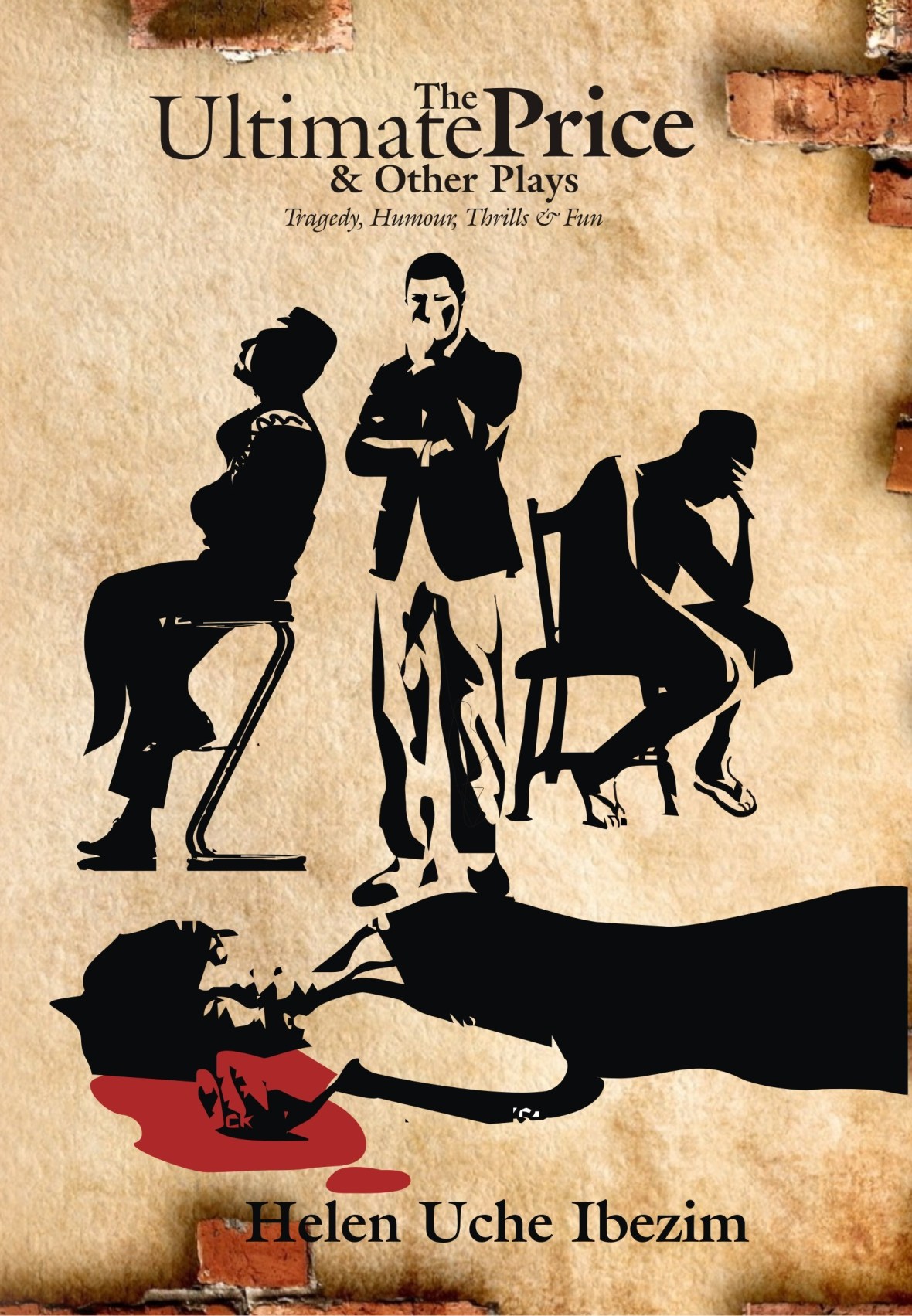
- What is the major thrust of your collection, The Ultimate Price and other plays and what inspired you to write them? In essence, what’s the story behind each of the plays in the collection individually and then, them all collectively?
The primary purpose of putting up that book of three plays is to bring into drama form, certain aspects of some practices in the society where we find ourselves. You see, things are not easily forgotten when they are put into drama form. I have observed several times, the big applause we give to people with a good command of languages that are not vernacular; the respect accorded to uniformed organisations; and the way children regard their teachers as idols. These practices are encapsulated in the various plays.
- Which of the plays would you say is your best and why?
I wouldn’t be in a rush to say which one is my best play because I was the one who conceived the idea of each of them. However, one may have more inclination to one than others, due to some reasons. Basically, each of the three plays was centred on comedy, to entertain the audience, even while getting the lessons each had to offer. But because of the ‘big grammar’ which sometimes the audience may hear and applaud without necessarily acknowledging the meaning, I feel the play ‘The Ultimate Price’ is quite entertaining. One witnesses a situation where people rate someone high, simply because of the large vocabularies a speaker voices out, even when they don’t understand what is being talked about.
- What do you think of playwriting, and how would you compare it with your other writings?
Playwriting is action-oriented. Every sentence must be assigned to a character in the piece. Each action is geared towards generating a reaction from the audience. If a play is dull, definitely, it will lose the listening public, but when it is exciting and action-packed, it thrills the audience and get them engaged and entertained. Of course, the reason for people to attend drama presentations is first to be entertained and then to learn some moral lessons from the actions of the characters. So, in writing a play, one needs to think of activities that will hold and sustain the attention of the audience to the end. Otherwise, any action missed by the onlookers, probably due to loss of interest in some parts, may result in non-comprehension of the entire piece.
But in other writings, actions may simply be narrated or described without sourcing for characters to dramatise the actions there. Those other writings, therefore, are less painstaking, especially when they are not voluminous.
- Your works seem to be didactic with lessons. You even emphasised that, earlier on when you were talking about Beyond the Heartbeat. Do you always set to teach lessons or do the lessons somehow just find their way into your works?
Of course, I always have a message to convey! Without aiming at teaching lessons, I would have merely left the works to be just exciting and for reading sake. At the end of each of my works, there are many moral lessons one will grasp, even while still being entertained with some funny interludes and dramatic expressions. I aim at affecting people’s lives and lifestyles, for better. Hence my works are often didactic.
- On a personal note, which writers are you fond of and what works would you consider your best?
To say the least, I’m in love with Chinua Achebe. His style of writing, especially in Things Fall Apart, is what I adopted in my book, Beyond The Heartbeat, which I describe as my favourite. Similarly, I adore Chimamanda Ngozi Adichie, especially her wonderful book, Half of A Yellow Sun. That lady is really talented, and I respect her for her literary prowess.
- Interesting that you would love both of them; several people say they have a lot in common. Talking of these writers now, who have used their work actively in championing the voice of Africa on the one hand and also feminism, as increasingly seen in Chimamanda’s works, what would you say is the role of writers in contemporary times?
Writers have the role of transforming society through their pens! As politicians have the political power, writers have the literary powers to shape and reshape both the politicians and the entire populace on the way to go. Conceiving ideas without putting them on paper does not yield many results. Writers are, therefore, the bridge between the conception of ideas and transformation of those ideas into action, through a medium of communication, which people will read, interpret, and execute. Through writers’ craft, people have been able to relate to the past, narrate the present, and propose the future. It is writers who will convey the message of the contemporary world to the future generations, through their write-ups. They are a real force in any transformation agenda of every country.
- What new project are you working on and when do we expect to see it?
My new project is a motivational book, titled When One Door Closes. I will use it to wrap up the end of my career as a civil servant. It is meant to give people hope that when you exit a particular service or business, other opportunities are knocking at your door. It gives you clues on how to open a new door and acquire fresh skills. It makes you understand that delay is not denial and that there is ability in disability. It makes reference to some life challenges such as job termination; dropout from school; when death strikes; and life after retirement.
- Any final notes words to say?
I encourage people to imbibe the idea of reading and even writing, for those who have the passion for such. In writing, no time is late. To me, there are no late starters in writing! You can write at any age, and through your writings, you can make a positive difference in the society and your immediate environment. Writing gives you self-confidence, as you are assured that you have impacted on others!
Again, when you read widely, you gain deeper insight into experiences, some times, even more than well-travelled people. Through books, you can be exposed to what is obtainable in countries you may not even have the opportunity of visiting in your lifetime. You get to learn new cultures and other information that are relevant to you as a being. No person is an island, so furnish your life with literary materials that get your life going such that you will enjoy it and indeed, smell the roses therein.

 SEVHAGE [MIDLAND] Reviews