Title of Book/Author: Fruit of Pain (A Novel) by Mabel Adinya Ade
Publisher/Year: SEVHAGE Publishers, 2021
ISBN: 978-978-58437-6-7
No. of Pages: 105
Reviewer: Eugene Yakubu
Fruit of Pain by Mabel Adinya Ade captures the excruciating feeling of motherhood, the depressing experience of childbirth and how the society constructs the woman’s body to bear pain and torture just to be validated as “fertile”. It talks about the pain of loss and the distress of losing one’s pregnancy, the dark hole that women are thrown into during childbirth and how the society folds its hand. The book also explores the complicity of loved ones, especially spouses, in the struggles that such women face.
The protagonist in this story, Mercy Albert is a woman who has gone through pain and trauma, but instead of letting the pain clog her mind, she invests her time in helping women who are going through similar situations like her. In this story, the author Mabel Ade engages with the effect of patriarchy and sexism on womanhood. She brings to light despicable stories of the violence on the woman’s body. From women who are forced into sex by their husbands during contraction to women periled by lack and hunger, to women raddled by pain because of the complications of childbirth. Not much stories have I seen that narrate the plight of womanhood in such a graphic, unapologetic way.
Fruit of Pain proves that maternal health is an issue that needs to be prioritized in our society. Through the story of Mercy Albert and Jude, we see a family wrecked by patriarchy and a love soured by tradition. Jude allows himself to be influenced by his relatives who believe he’s not man enough without a child. And when eventually the child comes, they also believe he’s not man enough if he doesn’t have a male child. And like the protagonist of the story proves, no child is superior to the other based on sex or gender.
Fruit of Pain is deconstructing the idea that a woman’s body is not hers and is solely a container holding babies. Mercy has been subjected into different traumatizing experiences at childbirth but her husband who is desperate for another child feels having a baby is more important than any kind of pain his wife might have been going through. In one of her many experiences with childbirth, Mercy says she “felt as if [her] windpipes were clogged and all the air had disappeared from the room”. Sometimes she feels certain that her waist and lower abdomen were being shredded. And there was even a sudden splash of blood by the time she was being wheeled into the theatre. All these pain and trauma, this affliction is what some women pass through even when it has become obvious that their body doesn’t want another experience at childbirth again. At a point in the story, the womb of the protagonist is likened to a graveyard due to her many experiences. There is a seeming lack of sympathy and empathy from society for her and many others who should ordinarily know better. This echoes the ‘factory’ value of women where society expect that they should produce children, usually of certain sex and of certain numbers. Where this is not the case, it descends on such a person. It is interesting to note, as reflected in many instances in this novel, that despite this pressure on the woman to be a production machine, the facilities are not put in place to ensure health standards that guarantee the health of mothers and babies at childbirth. The novel paints several scenarios from rural settings to urban settings in Nigeria and even in a developed nation to show the shared pain and misadventure that childbirth can be for women anywhere in the world. Is it not sad that such a thing should unite all women devoid of race, creed or situation? Of course, it is better to have choices as shown in the book but when one notices that you have a strong chance of wrong happening to one at childbirth, does it not call for far more attention to be paid to maternal health in all ramifications?
We need to start talking more, far more, about issues like what Mabel Adinya Ade raises in this story. A woman’s body shouldn’t be owned by tradition, she should have the liberty to decide what works or not for her. This is what this story emphasises to society. Essentially, pregnancy and childbirth should be a thing of joy and happiness.
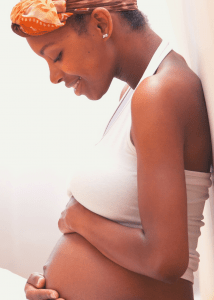 This is an important story for both women and men. For men, to have an inkling of the kind of trauma of childbirth and the hell that women pass through against sexist traditions we uphold and won’t let go of. For women, to learn how to prioritize their bodies, and not their spouses or tradition. Even though this reads like a very depressing story, the writer is bold enough to bring these issues to limelight and in the end tells a story of victory, refreshment and great beauty. She’s undoing for her gender what a sexist tradition has enforced on them for a very long time.
After reading this story, a reader will be compelled to agree that no woman would/should let her body be used to appease men’s ego, slave over tradition and bear pain anymore. Fruit of Pain is a quality advocacy tool for maternal health that speaks to issues in an entertaining and engaging style that others might have overlooked. One will see reasons why more attention should be given to maternal health which several people take for granted. This might not be unsurprising since the author is a maternal health advocate with several years of development work experience in this area too. Whatever the case, there is no doubt that this is a fine debut novel.
Fruit of Pain is available for purchase. For details, send an email to aarisefoundation@gmail.com .

 SEVHAGE [MIDLAND] Reviews