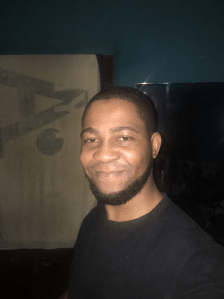
Tope Ogundare is the author of The Book of Pain, a collection of poems rendered in easy to read verse. They cover the breath of various themes and bring in medicine in an interesting mix. In this conversation, he discusses a few issues of interest with Su’eddie Vershima Agema.
- You are the doctor who is known more for his penship than for anything else. Walk us through your background, a bit of your growing up and your professional career thus far.
Ans: (laughs) That is a loaded question. I will try for brevity. I was born in Ado-Ekiti, part of Ondo state then, attended Federal Government College Idoani, Ondo State. Then, the University of Ilorin. I served in Kazaure in Jigawa State. I did my postgraduate training in Psychiatry at the Neuropsychiatric Hospital, Abeokuta. I am a double certified Psychiatrist with a license to practice not only in Nigeria but in West Africa. My current interest is in Public Health aspect of Mental Health, moving towards population-based mental health promotion. I will not say that I am more known for my penmanship though: I am an upcoming writer, in a manner of speaking, but a well-established professional [medical practitioner].
- Let us in also on your writing journey, how it started, where it has taken you and where you are now.
Ans: Writing has always been a dream of mine, but fiction. Coming into poetry was serendipitous. A night of power-outage, melancholia and loneliness was the heady mix that got me belting my first poem. I shared it on Facebook (bless Facebook notes – my first public platform for sharing my works) and all my friends were gushing about it (most likely beginner’s luck). So, I decided to try my hands at it, and well, I don’t seem to be doing too badly. I still harbor the dream of writing a full-length novel though, but the dream is fading by the day.
- Why would you say that writing a novel is a fading dream and is(n’t) there anything you can do about it?
Writing fiction does not come to me easily as poems do. when I do get a plot for a story, it usually for a short story. I think writing fiction goes hand in hand with storytelling, so those who are natural storytellers will find it easier to write full length novels. And I am not a very good storytellers, I am more of a state-the-fact person, so, it will be a bit difficult to write a story that spans 300 pages. It is this self-realization that shapes my statement that writing a novel is a fast fading dream.
- Related to the foregoing, how does your medical practice intersect with your writing and are there clashes that come between the two professions – i.e the writer and doctor. This is also noting that we find traces of the Doctor in poems like ‘Block 10’ and ‘Cervical Incompetence.’ One is reminded of the first stanza of your poem, ‘Impedance’ too: “Your cervix is hostile/It kills my sperm;/The race is lost before it begins/Let’s not waste time in this dance/Of shame.”
Ans: (smiles) At first, I tried separating the two worlds in my writing. But, when all your life has been spent in the world of science and medical jargons, you realize that it is difficult to be authentic without incorporating that part of you into your work. Plus, the number one advice to writers is ‘write what you know’, so, I write about what I know. My practice influences my perspective and the way I see the world, and this reflects in my writing. Still, I try to keep the medical jargons at bay and try to see the world from different views. I love music and nature, and they also feature in my poems.
There are some of my poems that were inspired by patient encounters, and I once wrote a suite of 6 poems about common medical illness I encounter. It got me my first fan mail, a white woman wrote to me when she read them in the magazine it was published in. she said it captured her experience and she was moved at how a doctor could capture this (I think in her experience, doctors appear cold and unempathetic and do not connect with their patient’s experiences).
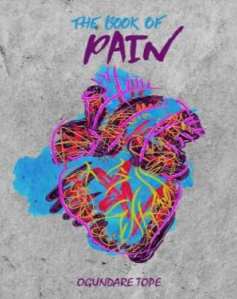
- Your poetry collection, The Book of Pain is made up of thirty-nine poems on diverse themes. What inspired the book and what was your basic criteria for selection?
Ans: I have a friend who told me that my poems are melancholic and gloomy, so it was fitting that this collection is all about pain – in various forms. Perhaps it has something to do with dealing with people with pain in different forms and hearing several such stories. This collection wasn’t my original manuscript. I had over 200 poems sent in one manuscript. My editor was shocked (laughs). But he felt the poems were not good enough for a first collection and wanted me to work on something different. This came at a time that I was beginning to explore the intersections of medicine and poetry in my works and trying to find authenticity or my ‘voice’ (which I don’t think I have found yet). These poems were the product of that era.
- Which poem or two are your most memorable in the collection and what is the story behind them?
Ans: This is a very difficult question, it is like asking a parent to name a favorite child. Emerald comes to mind – it was written for a friend, and it was this poem that made my editor (oga at the top) topple my first manuscript; he said he liked the new direction of my writing and to explore it further. ‘Our music never stops’ and ‘Georgia nights’ also come to mind. ‘Georgia nights’ was fun to write, the title is actually borrowed from a collection of short stories I read a long time ago – a love story. The hero was a musician who fell in love with his brother’s widow. The hero played the guitar and banjo.
- Are you happy with the collection? Is there something you think you could have done different with it or is it just alright?
Ans: There is a certain uncertainty that comes with re-reading your own work, especially when you are still growing as a writer. After the e-book was released, I read the poems again and I wasn’t feeling them very much. I don’t know what I could have done differently but I can’t shake the feeling that the collection is not good enough.
- That is nice. It is always a good thing when an author feels like they could have done more. It often means that they will be committed to do much soon. Now, considering you said you wrote those poems in your medico-poetic era, what era would you say you are in right now?
I love the term ‘medico-poetic era’. I think medical terminology will always make its way into my poetry. Every writing bears the imprint of the writer, a unique way of expression and style. These medical terms are part of my vocabulary, and they will find their way into my poems. I can’t tell what ‘era’ I am in, but I am consciously trying to keep the medical terminologies out of my poems as much as possible and exploring new ways of expression.
- What’s your general take on poetry and poets in general, then in particular, on poetry and poets in Nigeria?
Ans: I have an ambivalent relationship with poetry. I never liked reading poetry growing up, because for me it is obscure most times. I still do not enjoy reading some poem and poets even now. Poetry for me is about the expression of feelings or an interogation of the world or a part of it, and should be accessible to everyone. When I struggle to decode what a poem is about or have to read it multiple times before I get a sense of it, I do not appreciate it. They say poetry is the highest form of art and is for intellectuals and all, and I don’t think I belong to that elite group. But I am making an effort – to grow into the art form, one must fall in love with it, and read widely.
Poetry in Nigeria is a blossoming art, and we have a lot of beautiful poets, some popular and some not so popular. I find poems written by Nigerians (whom I haven’t heard of) in literary magazines, and I am moved by the sheer beauty of their art. These are poets writing from Nigeria. And then there are the big names – Dami Ajayi and Su’eddie (whose poems I actually studied and tried to emulate), Romeo (he writes the way water flows, with such fluidity and clarity.), Jumoke Verissimo, and many others – who are revolutionaries.
- What’s your impression of the other genres of writing and do you write in any other genre?
Ans: I love fiction. You will find me almost always reading fiction. My taste in poetry is eclectic, and I tend to read pieces here and there. My personal collection of poetry is small (and I know I should be ashamed to say that) but I have a huge collection of fiction – both paperback and electronic.
I dabble in fiction every now and then, particularly short stories, and micro-fiction. Most of my fiction pieces are published on my blog but recently my short story ‘Fickle’ was published by Kalahari Review (and I think that is my first ever un-self published short story, aside from some pieces published on Naija Stories – a writers forum). I am thinking of putting together a collection of short stories in the nearest future.
- The recent death of Professor Pius Adesanmi has inspired some renewed interest in social consciousness, especially amongst writers. What is your take on the role of the writer as a social crusader and would you say this reflects in your writings?
Ans: Prof Adesanmi’s death was a rude shock. We need more of him around, people with deep insight and with the clarity of words and passion about nation-building. Sadly, I am no social crusader. I am made of fluff and not steel. Maybe because I am more introspective and more interested in what goes on inside than outside. Writers should not be forced to tackle social issues, in my opinion. Staying true to one’s self, and passion is key. Writers are not the custodians of societal morals, they are observers most times, documenting human history and stories. But, writing is a tool of social activism and social change – activists must be able to employ this tool to its maximum potential. Manifestoes, Opinion pieces, Editorials, and Essays are ways social activists can employ words to change social consciousness and influence popular opinion. For writers who have an established platform and influence, they could use this to tackle social issues dear to their heart, or issues they are passionate about.
Personally, I do not comment on political and social issues, not just because of indifference but most times, I realize that I need to know more, learn more, understand context and tackle issues from both sides in order to have an informed opinion. And this takes time and much learning. And it is in this area that Prof Adesanmi stands out. His views are balanced, based on sound reasoning and logic, scholarship and consideration of every perspective, and founded on experience. That is why he is so revered and venerated. It is not about jumping on issues and spewing half-formed ideas and logic.
- Relatedly, do you think that there is more that Nigerian writers can – or should – do in relation to the country and everything happening therein? Also, mention good practice, if there is any, and proffer what suggestions you think are necessary.
Ans: I think the burden placed on writers to be social crusaders is unfair. A writer is someone who has a story to tell. It is not fair for us to tell him what story to tell or what his dreams and aspirations should be. A writer is human, let them be. It is true that writers have an influence on people’s thoughts and can shape how they think but we forget that a writer writes about what he knows and believes, so, what makes us think that writers have the right ideas or the right knowledge to influence us positively? Does he know enough to tackle social issues or have the depth to engage these issues logically? The voice of the writer is not the voice of the collective. We, however, do have writers who write out of a passion to tackle social issues – either through fiction, poetry or non-fiction, and that is okay.
With regards to good practice, writers should strive to be the best they can be as humans. They are in a position of power and influence and this demands a higher duty of them. Not to take advantage of wide-eyed admirers, nor parade themselves as ‘gods’ and trample on people’s basic rights. They are to use their platforms with integrity and honesty. Writers are humans and have a right to their opinions too, even if this conflates with what we expect of them; we should let them be. Writers should be willing to engage people on their platform, learn, collaborate and promote humanity and a respect for other people’s humanity.
In Nigeria, we have a crisis of morals, human rights abuses and increasing ethnic divide and discrimination. Writers can use their platforms to engage people in dialogue and seek to change our culture. We should all try to become better versions of ourselves and strive to live and give permission to the next person to live too, even if their own ways contradict what we believe; everyone has a right to be, to self-determination. A person living a life we would not approve of does not in any way shorten our own lifespan nor pollute ours. No one way is right, no one belief is the way, there is no one way to live (even if sometimes we are led to believe this).
- Well put and well said. With such a posture, the question arises: what’s your philosophy to writing and what are your writing aspirations?
Ans: I think like every other writer, I want to be heard. I want to find my audience and be found by them. Every writer is a voice to someone else and writes words that echo someone’s feeling and existence. To write to validate someone, give them permission to be and live.
In a review of ‘the book of pain,’ someone wrote “it’s pulling me in an embrace that I can never be alone in every pain I will face and have already encountered in my life.” that was very heart-warming. I aspire to write words that will endure for generations and still connect to generations that will come after.

To buy Tope Ogundare’s The Book of Pain, visit Okada Books or Amazon.

 SEVHAGE [MIDLAND] Reviews