(Jide Badmus in Conversation with Su’eddie Vershima Agema and Oko Owi Ocho)
Can you give us a background to who Jide Badmus is?
I’m a son to Elder and Mrs Jide Dele Badmus, from Omido in Kwara State. I am the first of four children – two boys and two girls, married to a beautiful wife, Linda. We are blessed with two adorable daughters, Nora and Nicole. I attended Unilorin Secondary School and studied Electrical Engineering at the University of Ilorin from 1999 to 2014. I have a Master’s degree in Information Technology Management from Binary University, Puchong, Malaysia earned in 2013. So, I’m a practicing electrical engineer and a writer.
Being an Engineer, what prompted you into writing, is it something that has to do with filling up a void in the soul?
I have been writing all my life. I used to write stories and draw comics as a kid; I’d give to my parents and siblings to read. However, I became consciously aware of my writing ability in 2002. My first two poems were written in 2001. I stumbled upon the poems a year later and couldn’t believe I had written such beautiful words. I didn’t look back from then on. I would write poems during lectures or night classes and show friends seated close to me. It wasn’t really about filling any void but finding ways to express myself.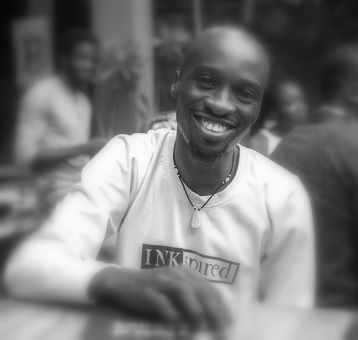
What is the focus of your first collection, There is a storm in my head and what was the writing experience like?
The first collection focuses on my essence as a writer. The ‘storm’ is metaphorical. It stands for the thoughts that keep me awake at night, the ones I struggle to articulate; my fear, hopes and dreams. The book is basically a catalogue of man’s desires. Being the first, I wanted to put everything in it! I made several changes to the content. It went through four changes in title and several changes in content. The collection is actually a journey of nine years. Holding my book for the first time was emotional for me. I blinked back tears and took a couple of selfies. I read through the book as though it was written by someone else.
Wow, that’s very informative and we can relate to the experience of having a first book in print. Okay, let’s focus on your current book, Scripture, which was just released by SEVHAGE. The collection dwells primarily on the strength of man. What inspired the collection and what would you say you have tried to capture in it?
Scripture was borne of the unrelenting storm in my head. The question had always been what comes after the storm? But the storm does not end. There are only periods of calm, interlude… So, I tried to explore the types of storm and what calms them and discovered that There is a SCRIPTURE for every STORM. Scripture (the book) tries to establish a link between spirituality and sensuality. It explores themes like faith, love and lust; man’s existence revolves around these! The collection seeks to explore the path to a supreme being and understand self.
Okay, that makes sense. Scripture is made up of six chapters that cover different sections and overall themes. The chapter ‘Sunset in Paradise’ is a section with love poems. How does this flow in the journey that demystifies the self? Furthermore, what is the importance of love to you?
Love is what we all crave. Sometimes we find it hard to admit. It is pertinent we understand the object of our love because the more we discover of partners, the more we realize self.
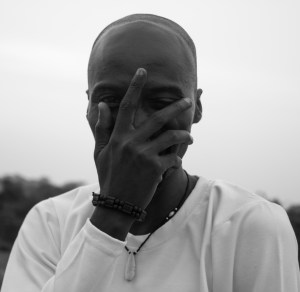 You are held in some quarters as an erotic poet and this might be seen in poem titles like ‘Just Lie Here’, ‘Lust in a Battle,’ and of course, ‘When words become moans’, all these poems as captured in the section ‘When Words Become Moans’ in Scripture. What’s your take on this and what will you say is the role of desire and sexuality in poetry on the one hand and art in general?
Well, many shy away from themes that border around sex, I don’t. Sensuality and sexuality form a big part of us; they are journeys we must embark on to discover self. Our souls and bodies thirst for the fire of ecstasy. I tend to take trips on paths least walked. I’m intrigued by lust and the fact that many see it as negative…
On the whole, of the various sections in Scripture (there are six of them: ‘Confluence of Fire’, ‘Sunset in Paradise’, ‘When gods Make Love to Men’, ‘When Words Become Moans’, ‘Fragments’, ‘Splint for Broken gods’), which would you say is your favourite or most engaging and why?
‘Fragments’ is the most challenging for me. I identify with happy poems, thus, it was hard for me to brew pain and darkness into lines. But it is what had to be done as we can’t deny the gloom that surrounds us and the pain we have to cope with daily as a people.
As a follow-up question, what poem(s) in particular speak to you in the collection and why?
‘Confluence of Fire’ speaks to me. It is the core message of the collection! It describes how man pursues perfection yet speaks of how he is a captive of his flaws. It shows how we seek purity yet yield to temptation and seek redemption. It’s a poem that shows who we think we are, who we are and who we want to be!
Stepping away from your book and looking at something that appeals to most people, success, what does literary success mean to you?
Literary success is basically having your works appreciated all over the world and being mentor and role model for upcoming voices.
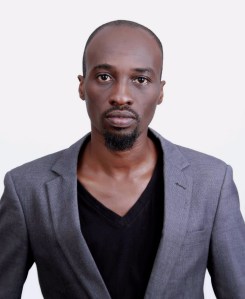
Considering that a reasonable amount of time has passed between your first and second collection, let us in on your growth as a poet, artiste and person in this period.
The release of the book launched me into a community of poets that I didn’t know existed (especially on social media). I became a source of inspiration to several which meant I had no choice but to groom myself and get better with each passing day. I found the boldness to share more of my poetry and found myself being looked up to in most circles. I had a lot of firsts: radio interview on Metro FM (Vivid Verses), I was on NTA, got invited as guest writer for a couple of literary festivals/events and was on ECG’s list of top 50 contemporary poets who rocked Nigeria in 2017. So much happened in a year!
What is your view on Nigerian writing in general with particular reference to younger writers?
The youths are showing great enthusiasm when it comes to writing. A new generation of unique and modern writers is emerging fast. However, most are not ready to go through the process of learning and growth.
What Nigerian writers and as a plus, general writers, stand out to you and why do they do so? Plus, be kind to mention if you have role models and why you adopted them.
Amu Nnadi is my mentor, his words are easy and full of life (and light); simple yet rich in apt imagery. I love E. E. Sule’s poems as well. Sir Eriata Oribhabor and Dr. Emman Shehu are worthy role models too; the way they promote poetry wholeheartedly is admirable.
What do you think is the view of the role of the writer in society and can you comment on the current happenings in Nigeria?
The role of the writer is to write. It could be to address current issues, entertain, educate or advocate. We create social, spiritual and emotional awareness. It is sad that humanity is almost non-existent in Nigeria. Life seems to have little value here. The leadership is bereft of ideas and the populace is made up of frustrated beings who have lost hope in the nation.
Now, if you could tell your younger writing self anything, what would it be?
You are your own inspiration!
Any parting words?
Learning is an endless cycle, don’t stop growing.
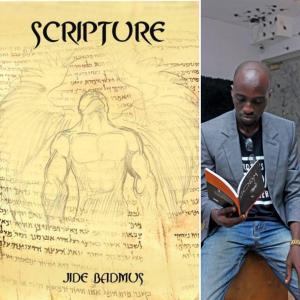
To order Scripture, kindly send an email to sevhage@gmail.com or contact the author at jidebadmus@gmail.com

 SEVHAGE [MIDLAND] Reviews
5 thoughts on “There is a SCRIPTURE for every STORM: A SEVHAGE Conversation with Jide Badmus”